Wind Operations and Maintenance Australia (WOMA) Conference Report
Melbourne, Australia, February 2026

Immature, ad-hoc and reactive was the overriding consensus of Asset Management practices in Australian wind.
Contracted Blindness
Owners struggle with contractual access to their high-resolution WTG SCADA logs and CMS data to enable insights into reliability and performance. This point was well laboured in the conference discussions, to the point of eyerolling, and whilst hindsight is 20-20, we hope to see data access cemented into turbine supply agreements in the future. Even with a O&M landscape dominated by FSAs, the importance of data access is not to be underestimated. In the future, regardless of what happens with O&M strategies and contracts, life extension decision-making requires good quality OPEX data, reliability information and operational data to properly manage risk. When your life extension report is more caveat than content, then you may find you lack the information to make a decision between decommissioning or a 10-year extension.

Owners were frustrated at the repeated questioning about their access to their own data [Image credit: Anchorman 2]
People Power
The nature of working in O&M is a lot like the Greek myth of Sisyphus pushing a boulder up a hill only for it to roll back down, their work never finished and their torture eternal. It would be easy to be apathetic or defeatist in such a situation, particularly if you have an OEM trying to hinder your progress or the utilitarian chains of bureaucracy making you fill out business cases and paperwork every time you want to raise a purchase order for a nut and bolt. It takes a certain type of character to continually self-flagellate for the benefit of some rotating piece of machinery that generates wealth for the wealthy and power for the ungrateful.

The best of Australia engineering and me
Australia has a particularly challenging operating environment, and I was pleased to see good character and capability in abundance. Wind has always been a young industry at heart that has clung to ideology, graft and refusing to accept defeat in the face of constant adversity from the weather, politics, mergers and acquisitions, re-organisation, grid and poor reliability. Most people still give a shit, want to drive change and these are the types of people who I like meeting and collaborating with.
Working hard, or hardly working
As well as some overworked people there are also some overworked wind farms with some very high-capacity factors, some in the regions of 35% to 55% coupled with 35%+ curtailment. When you combine these with high operating temperatures, it makes for challenging conditions for reliability. Electronics dislike the heat almost as much as the wet, and there is are a lot of opportunities for refurbishment of power electronics as well as upgrades such as improved thermal paste, higher environment rated components and better cooling systems. Thankfully the spare parts for Senvion, GE and Suzlon between OEMs and GWA Supplies ensure good support. However it is clear that there is a lack of local capabilities in repairs and major component refurbishment. People have given it a go and tried to support the development of local companies and for generic components such as motors and certain size gearboxes there is something you can do locally. However, outside of Australia more complex repairs test rigs and capabilities have been developed and matured for components such as PCBs, IGBTs and slip rings. The failure modes, turbines and operating conditions are common to countries like Spain, India and Texas so there is a global supply chain that can be leveraged for those looking to save money and support legacy parts. Speak to us about refurbishment and testing of power electronics and what we can do to support your business.

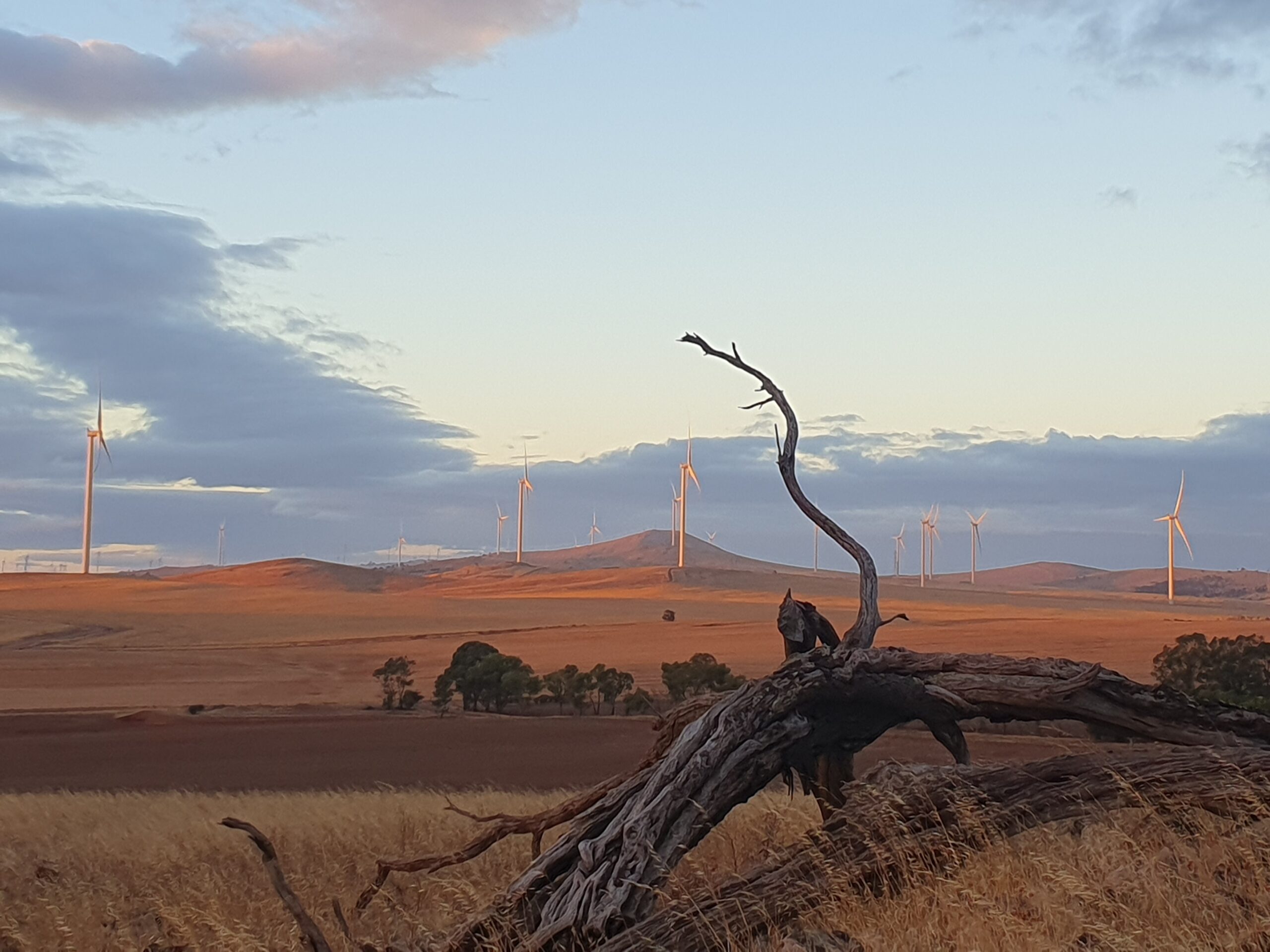
Harsh environments: Hot and windy. Picture: Hornsdale wind farm Jamestown, SA.
Cost of major components exchanges
This is absolutely eyewatering for onshore wind, even more so than the cost of beer in Australia (I had to remortgage). In the UK a jack-up vessel for an offshore changeout is around £100k/day ($200kAUD) and a refurb gearbox is around £200k ($400k AUD), which makes a changeout around £400k ($800k AUD). In Australia, I was told by numerous sources that, depending on where the site is and where the crane is, you could expect $400k for a gearbox and $600k for a crane. A massive boat that has a crew of around 20 people with hydraulic legs to lift it off the seabed is cheaper than a bloke in a crane driving across South Australia to whip out a 2MW gearbox. It goes to show the importance of supply chain and clustering wind farms to the cost of O&M. It does make a very strong case for the benefits of CMS retrofit, to capitalise on mobility costs by grouping changeouts and making informed decisions based on continuously monitored component condition. Nothing more embarrassing for an engineer than changing a clean bearing.

Lightning claims over blades was a big topic as well as how to better manage blade bearing failure
Prepare for legacy components, now
It’s last orders at the bar, Closing Time is on the juke box and there’s slim pickings for partners in the booths. The familiar shadows of GE, Suzlon and Senvion remain in the booths, looking up from their schooner of dregs with a cigarette held between a crooked smile.

Scrapped parts from a Senvion wind farm. Thumb still works fine.
Monitoring part availability and legacy component management are now a full-time job for some site managers. Mating contactors, relays, control modules and PCBs are all chased through the nacelle as envelopes and specifications are reengineered and, by the time you are finished, you are back where you started. The nature of power electronics is fast technological growth and even faster obsolescence. Refurbishment is a good way to go as the space envelope isn’t impacted and you can test for functionality using purpose-built test rigs before reinstalling. It was clear that the inexperience local supply chain for refurbishment in Australia has left a few people with bad experiences of refurbishment and this is something that we can support in overcoming through previous experience, case studies and test reports to show diligence and reliability.
I was lucky enough to visit a few sites whilst in Australia. Some site managers have got wise to refurbishment and stopped throwing stuff away, whilst others are careless with their green and grey gold. The clever technicians in the UK realise this and those with space in the back gardens have shipping containers full of old parts. This will give a better return than any pension, savings or dead cert at the horse races. Please don’t throw power electronics away: at the very least save them, refurbish them later and ensure you have parts into your later years of operation.
Final thoughts on the state of Aussie O&M
I love Australia, it’s a great place to travel and I’ve always found the wind industry there very welcoming and full of challenge. The conference was well organised and deliberately loaded with Americans and Europeans who were ex-OEM and had 5 or 10 years-experience on in-house maintenance, ready to be generous with guidance and advice. I think particularly the ex-GE personnel from the commercial and engineering side, now consultants, were very well-positioned as stand-in protagonists in the owner/operator biased discussions. While no longer with vested interest and freed of their corporate towlines, they played their part in the counter argument well. Whilst the OEMs were present in the audience, everything was civil and there were some good discussions in the corridors about collaborating on problems (always easier in person) and broader acknowledgement of the fact that if they didn’t build turbines, none of us would be here in such stimulating employment. I think on the WTG owner side, which is more asset management biased than engineering or Ops, there was a very open attitude, and in addition to the good attendance, there wasn’t a wasted conversation. Even a rope access bloke collared me to regale a good wind turbine poo story.
Whilst it’s easy to complain about OEMs, and as a Brit nothing makes me feel more at home than a good moan, there are no statues built of critics and we must crack on. It’s difficult to conclude this without a large helping of sentimental cheese but through collaboration, sharing the lessons of the past and the power of friendship (too far?) we will succeed. There is still good money in power generation and enough fat to justify FSAs but rest assured, that will not always be the case. Politics or economics will eventually pull the rug from underneath you and without the ability to control the wind, you need to find cost savings in O&M. Availability and liquidated damages will not be enough. When this happens, you will wonder why you wasted all those years in blissful ignorance.

Pictured: Blissful ignorance. Torquay, VIC. Toasting the end of the trip with a schooner in my smart-casual hi-vis.
I hope to continue to return to Australia for many years and support with minor component repairs for legacy components and CMS retrofits where I can to even the odds in data access, predictive maintenance and accountability. Whilst it is good to see the progress of ISPs and multi-brand O&M, I’ve always been a firm believer that in-house O&M is best practice for larger operators. Until that hopeful day, I’ll keep waking up at 5AM for calls, writing silly articles and trying to blag a trip out there whenever I can for the hot weather, cold beer and good chat.
Alex
Better manage your failures:


Leave a comment